a storefront for epic games
MY ROLE
Product design
Prototyping
User testing
CONTEXT
Client work with Instrument
the epic games store is one of the biggest online marketplaces in the video game industry.
It's also one of the youngest players in the game, and it was missing a major feature: Reviews. Epic was ready to ease into user reviews for EGS, but wasn't ready for the steep moderation lift required for an open written review system. They needed a bespoke solution that would allow player opinions to be integrated into EGS, while avoiding any exploitable features.
This solution took the form of polls — short questionnaires presented randomly to players who have met a gameplay threshold for the game in question. Epic receives information about the game, and distills it into easily-to-read reports for the game's product detail page.
This was a very strategy-heavy project with extensive user testing, which required a close working relationship between myself and the leading strategist.
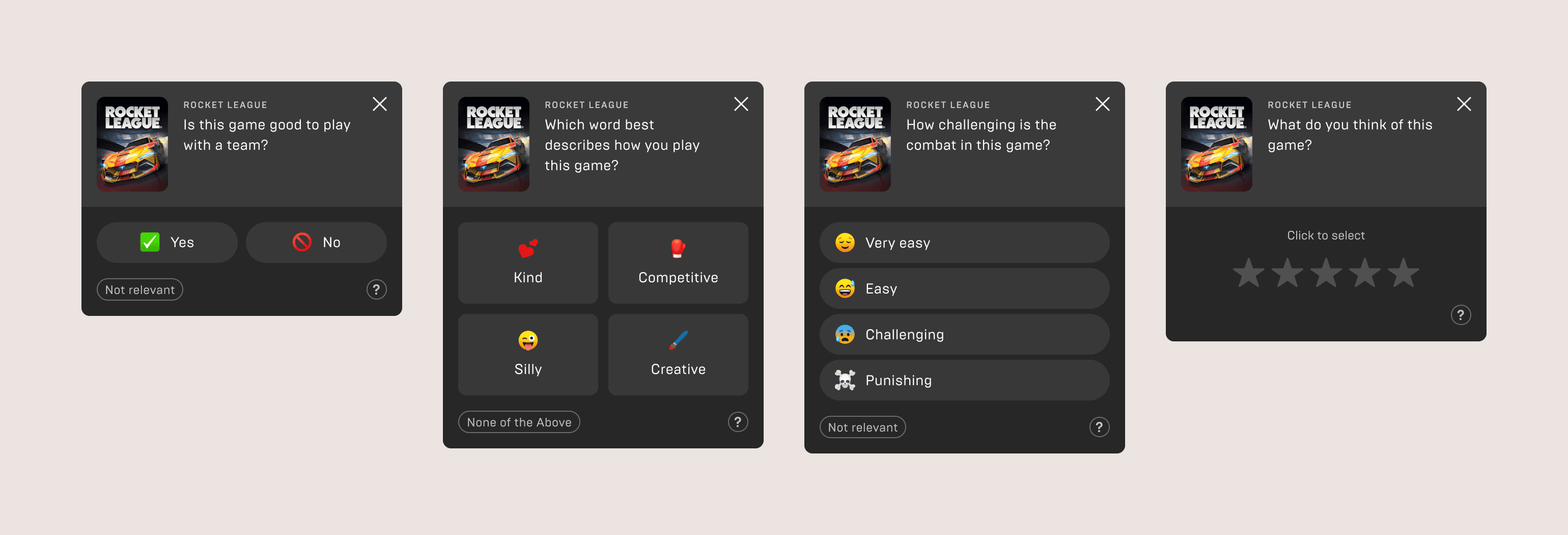
types of polls
A player's first introduction to EGS's rating system is a poll notification that pops up, asking them to answer a simple question about a game they've been playing. Despite being seemingly simple, this poll presented a slew of problems for us to solve.
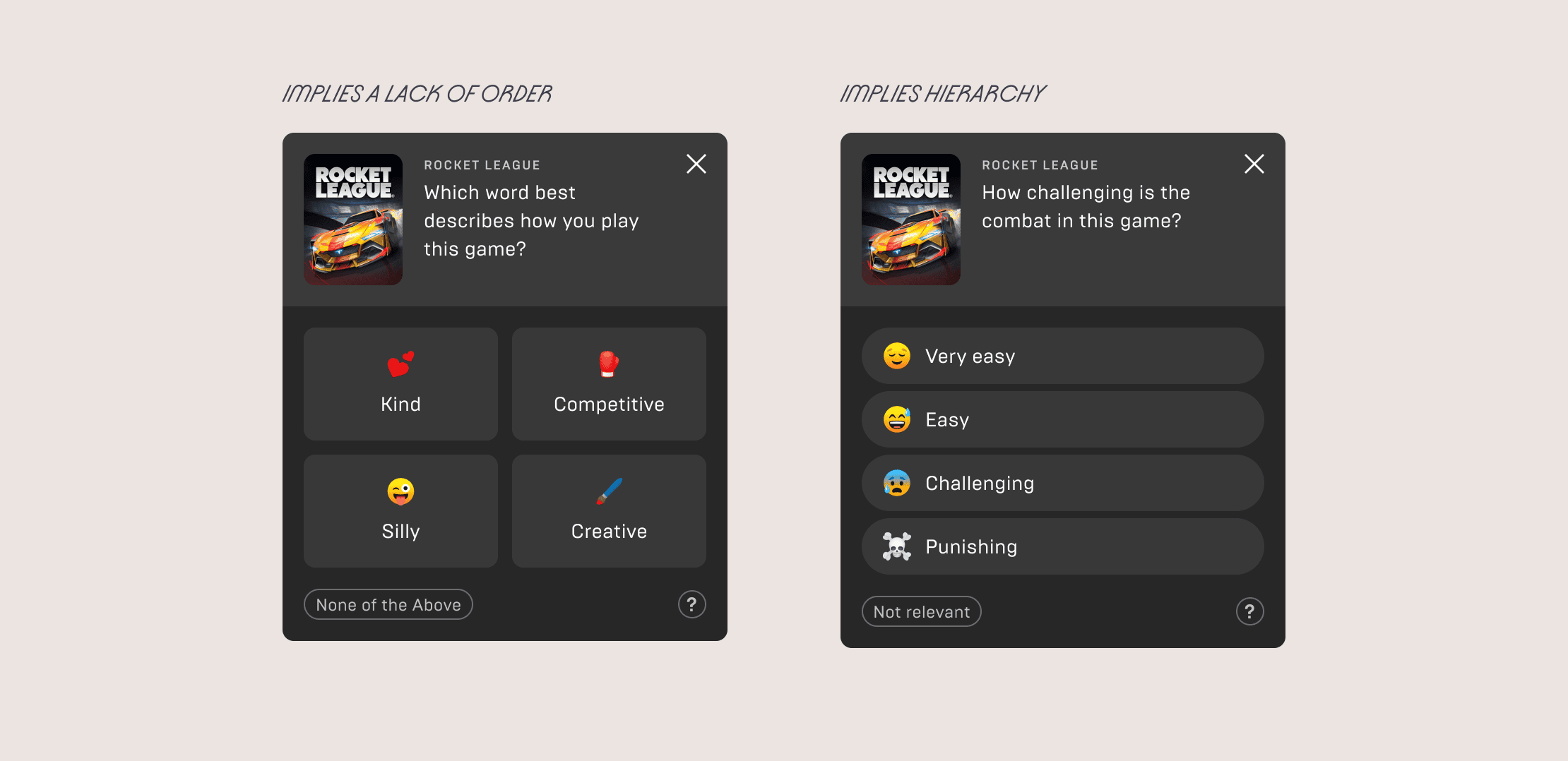
Simple details such as the arrangement of choices will have a significant influence on the ways users respond, so I designed multiple different form types to be matched to specific categories of question.
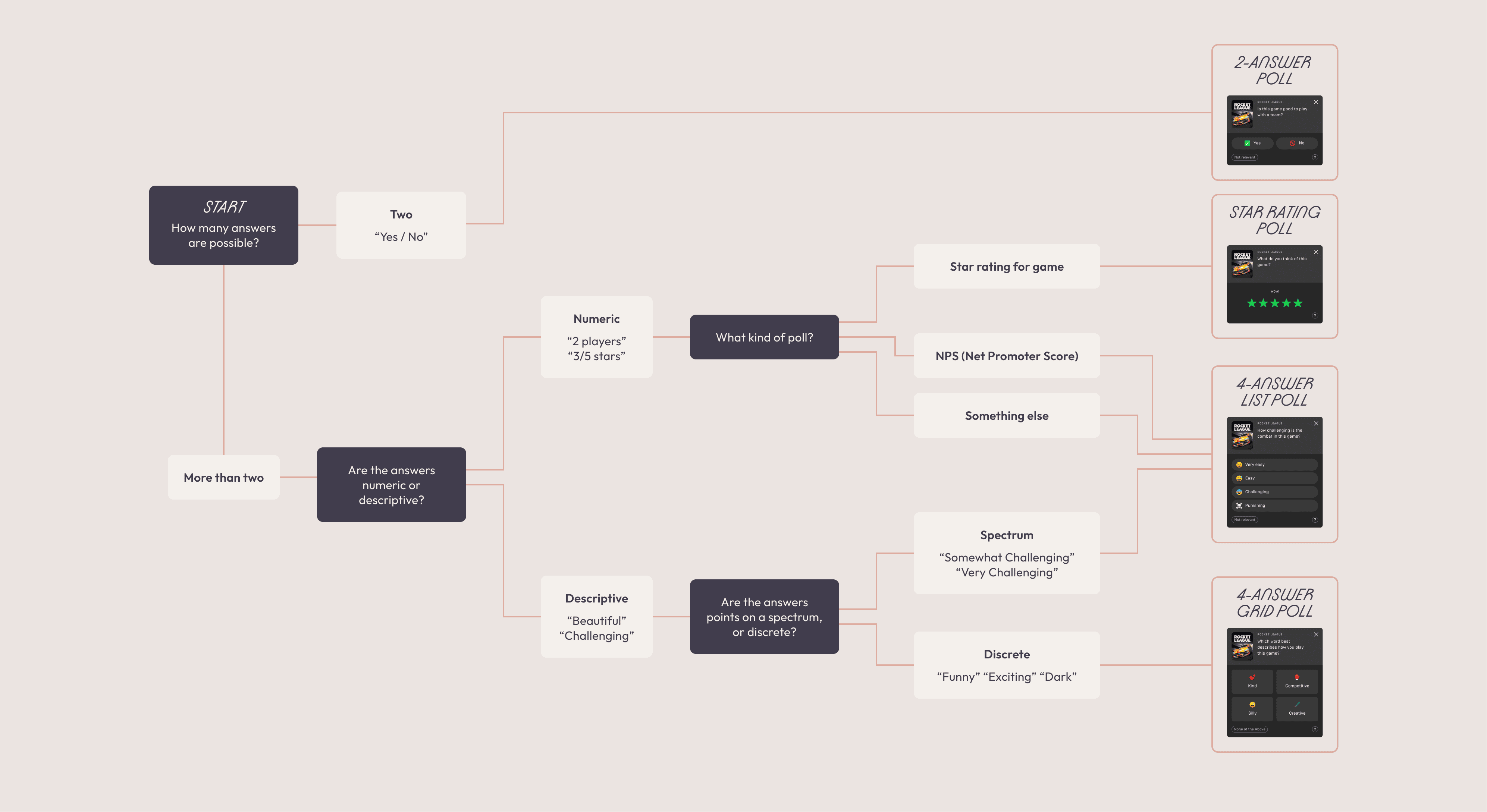
To make it easy to correctly categorize questions, we created a decision tree to offer guidance on which poll type would be most appropriate for any given prompt. This decision tree went through many different phases, and was important in ensuring our system could handle any question using the fewest possible variants.
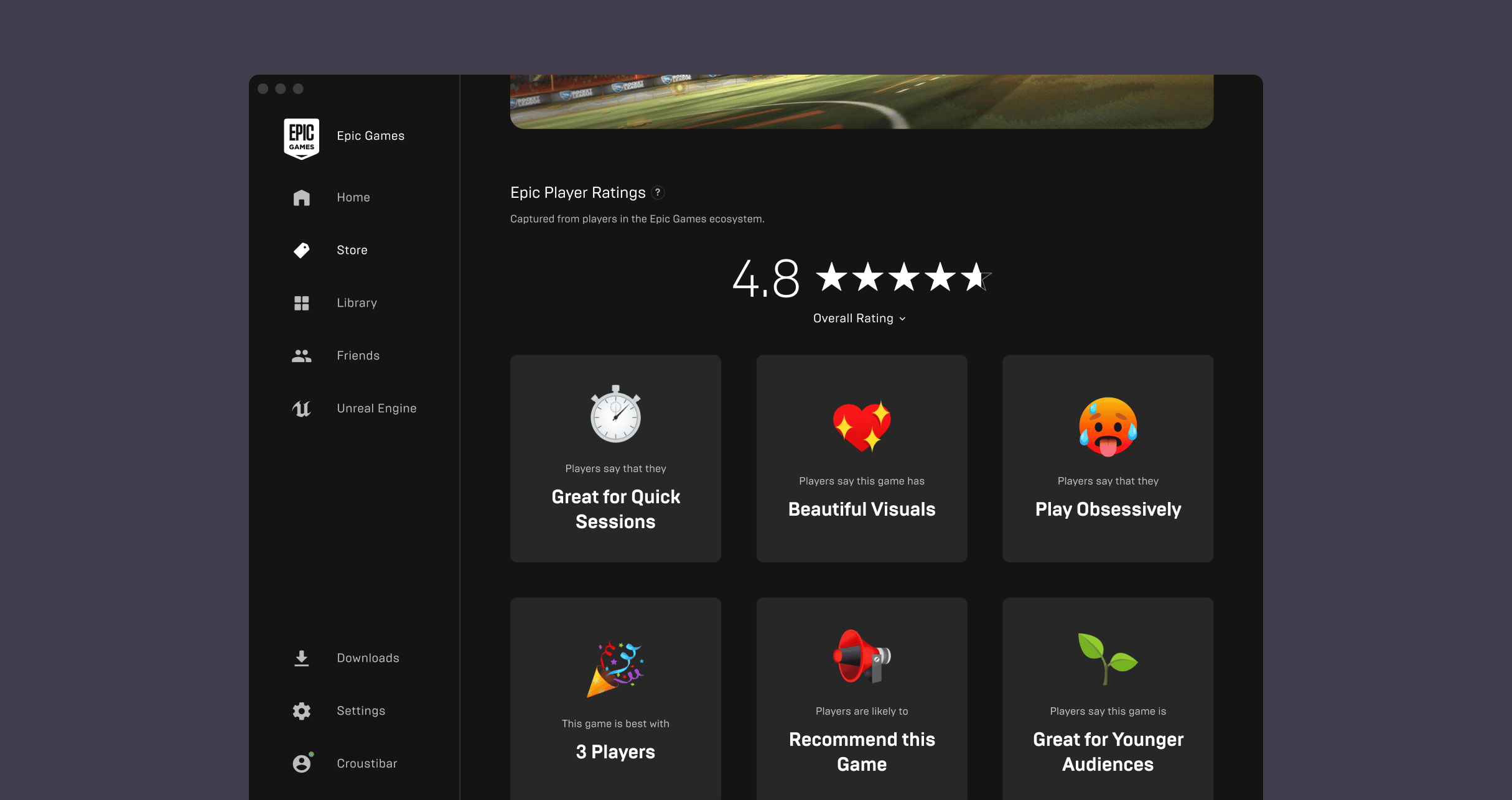
converting input to results
Displaying the results for these polls wasn't as simple as just regurgitating player feedback on the product detail page. This is curated content from Epic, not reviews. With the exception of star ratings, Epic had a responsibility to game developers portray poll results in positive or value-neutral ways.
This detail required a lot of design and strategy focus on how to turn poll results into useful information describing audience and gameplay style.
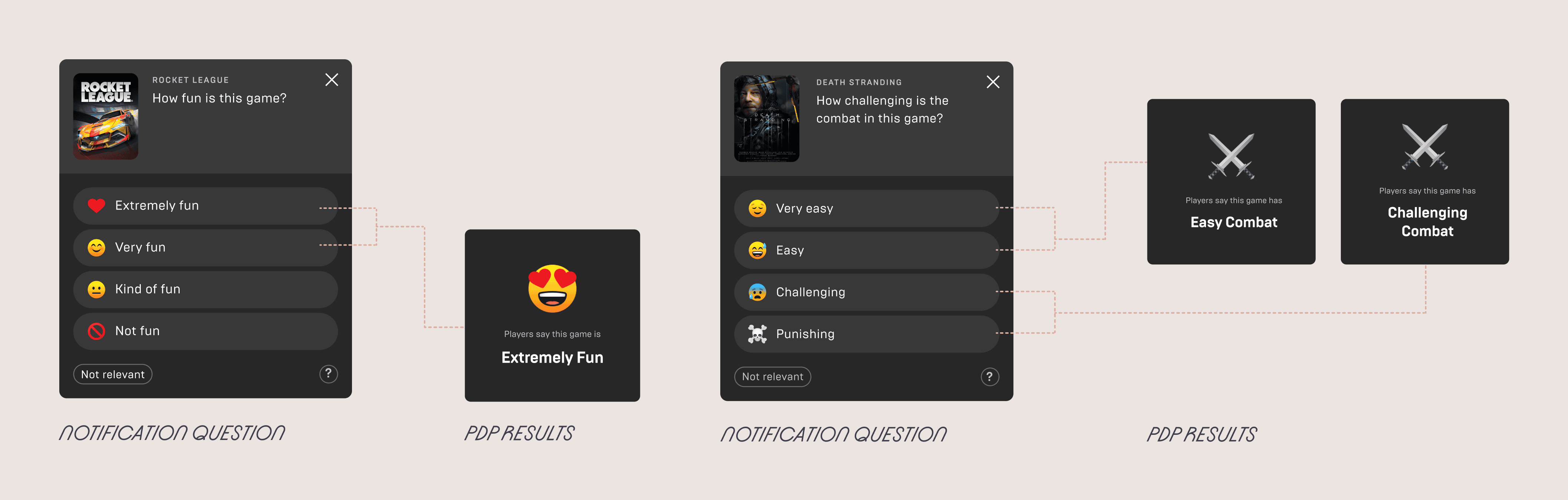
Accomodating countless results, localization, and screen real estate took weeks of iteration between design, strategy, and copy.
We didn't have any developers on the project, so all the web tests were up to me. I'm no front-end dev, but it's fun to break out the HTML/CSS chops every once in a while.
I have some past experience in 2D animation, so motion and prototyping is one of my favorite phases of the design process. I did the motion design for all four poll types, and brought them to life through Principle prototypes that the client could interact with themselves.
In the end we created a robust, meticulously pressure-tested, and easily scalable solution that not only met Epic's current needs, but will help in the transition to a more full-featured review system down the road.
As a highly organized and methodical designer, this type of strategy-forward work is exciting to me. I love being heavily involved in user research and testing, and finding creative ways to mix beautiful form with rock-solid function.